The Night The Bells Rang (July 8, 1776)
The Night The Bells Rang (July 8, 1776)
On the warm summer evening of July 8, 1776, the city of Philadelphia trembled with anticipation. For days, rumors had circulated through the cobblestone streets—whispers that something extraordinary was about to happen. Merchants leaned over counters to exchange the latest speculation. Children pressed against the railings around the State House yard, wide-eyed and restless. Even the horses seemed unsettled, sensing the energy building inside the city.
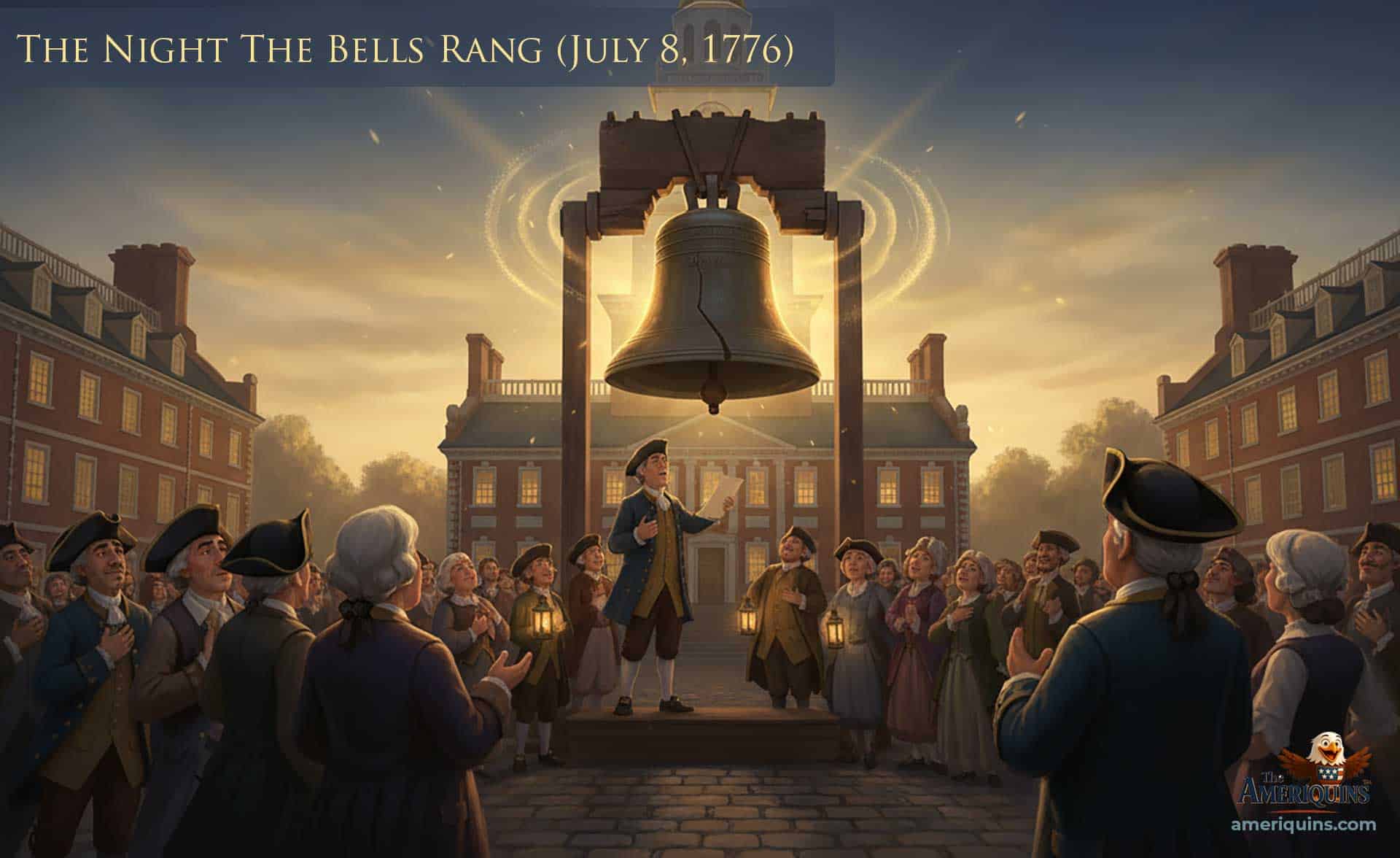
At about noon, the waiting ended. A crowd that had been gathering since morning finally pushed in toward the wooden platform behind the Pennsylvania State House. That’s when Colonel John Nixon—a veteran of the city’s militia and a trusted patriot—stepped forward with a parchment in his hands.
He read aloud words that would change the world:
The Declaration of Independence.
This was not the official signing day. That would come on Aug. 2, 1776. What made July 8 so electrifying was that, for the first time, everyday men and women heard the document read publicly—its bold claims, its indictments of the king, and its promise that a new nation had begun.
And when Nixon finished, something remarkable occurred.
Across the city, church bells erupted—not in an organized sequence, but all at once, as though the city itself exhaled. Bells from Christ Church, St. Peter’s, St. Paul’s… bells from small chapels and large steeples… bells for worship, bells for mourning, bells normally rung only on holy days. Every rope was pulled. Every tower shook.
The sound traveled far beyond Philadelphia’s boundaries. Travelers on the Schuylkill Road described hearing a distant roar, like a river in flood. Farmers paused their work and turned toward the city. People who had never heard of Congress now understood something monumental had taken place.
The bells were more than a celebration.
They were a signal.
A message carried on iron and air:
America had declared itself free.
That night, the joy spread through the city. Bonfires burned at street corners. Taverns lifted toasts to a future no one could yet imagine. Some loyalists stayed indoors—fearful, shocked, or disbelieving. Others quietly admitted that history had shifted beneath their feet.
Meanwhile, patriots wrote letters home describing the moment. Abigail Adams, far from the city, said she “longed to hear the bells of Philadelphia ring” and imagined how powerful that sound must have been. And in towns from New Hampshire to Georgia, the news carried by riders and newspapers set off similar outbursts of celebration in the days that followed.
Not everything about July 8 was triumphant. The city still lived under the shadow of war. British forces were preparing for a massive campaign in New York. The Continental Army was struggling with supplies. The victory was symbolic, fragile, and dangerously new.
But on that night, none of that mattered.
For a few hours, the people allowed themselves to believe that the world they were stepping into—uncertain as it was—could be better than the one they were leaving behind.
The ringing of the bells on July 8, 1776, carried a promise that continues to echo:
that freedom, once declared, must be defended, renewed, and passed on.
And that the sound of liberty is never just noise—it is conviction made audible.
We are excited to present to you The Night the Bells Rang.
The video, When Freedom Rang For The First Time, is just a few days away.