

American Schools: The School on the Prairie (1833)
American Schools: Education Built by Neighbors, Sustained by Discipline
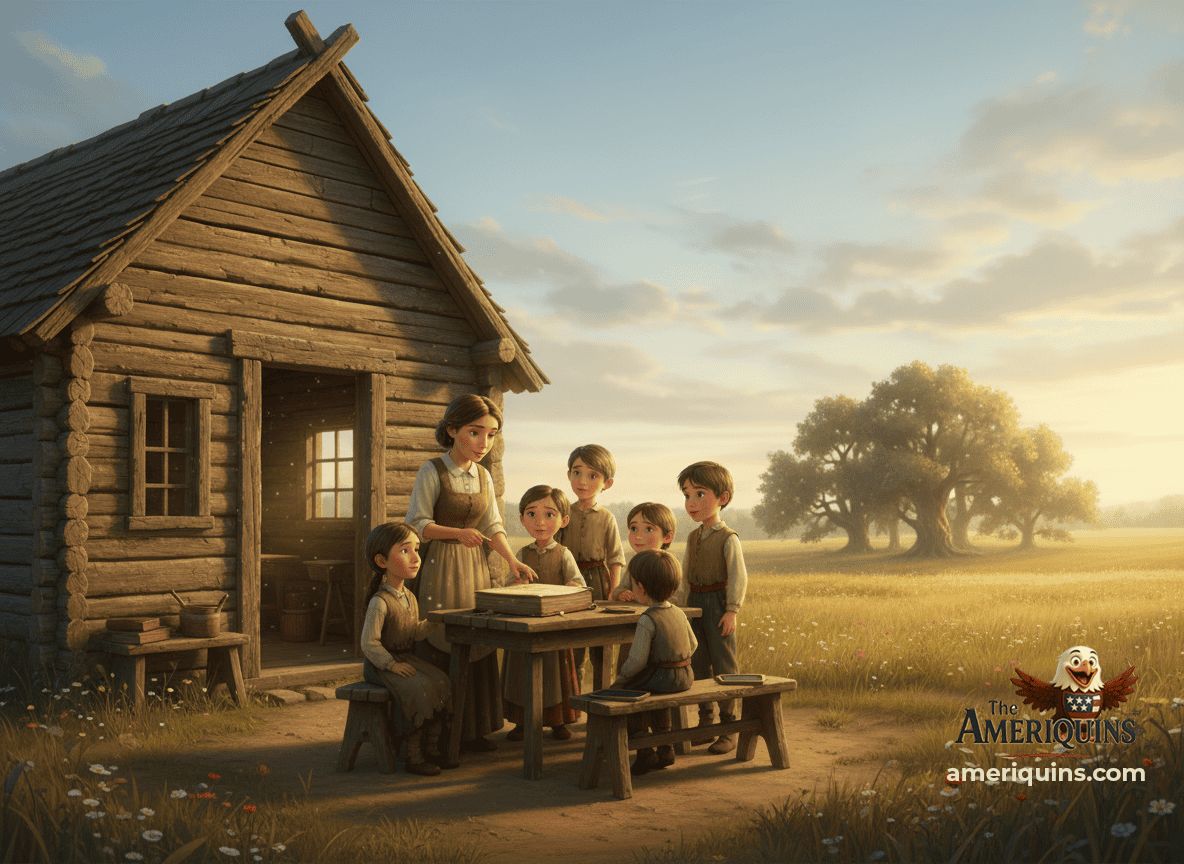
In 1833, American schools out on the prairie did not arrive in the form of policy or paperwork. It arrived through cooperation.
Families cleared land, raised walls, cut benches, and hired teachers together. The one-room schoolhouse was not a government program—it was a community promise.
Inside, students of all ages learned side by side. Younger children absorbed lessons by listening. Older students reinforced mastery by helping teach. Advancement wasn’t tied to age or calendar—it came through repetition, recitation, and proof.
Teachers were often barely older than their oldest students. Their authority came not from credentials, but from competence and character. They boarded with local families, answered directly to the community, and were judged not by ideology—but by results.
The curriculum was practical and moral: reading to think clearly, arithmetic to measure accurately, writing to communicate precisely. Long stretches of silence built focus. Discipline built self-control. Attendance bent to the seasons of real life, not the other way around.
The School on the Prairie reminds us that education once meant something deeper than instruction alone. It meant responsibility—to one another, to the next generation, and to the future being built just beyond the horizon.
Freedom still rings when knowledge is earned.